Skip to contentFarm Fresh
to Market
Request produce
Menu

Forem / GROWING, HANDLING & DELIVERY

From the plant
to the receiving dock.

Follow the work behind a loose grape-tomato program: selective picking, gentle handling, grading, packing and delivery. See the people, equipment and records needed at every handoff.

Follow the eight steps ↓Compare equipment and costs ↓
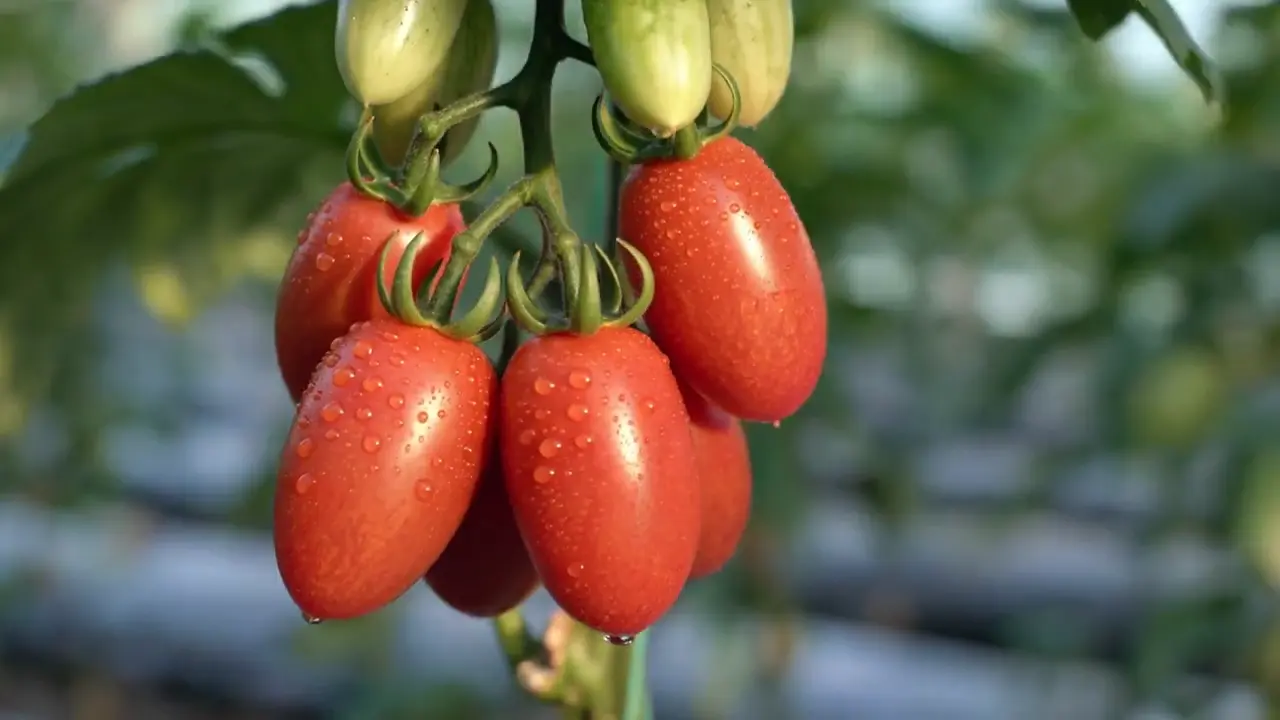
Grape tomatoes on the vine
THE CROP / GRAPE TOMATOES

THE WORKFLOW / LOOSE GRAPE TOMATOES

Pick the right fruit.
Protect it at every step.

Build the workflow around the crop, buyer specification and destination. Follow the eight operating stages, then match equipment and handling to the product at every handoff.

01Select

Choose individual fruit at the agreed color and firmness.

02Support & detach

Support the fruit; release gently at the stem, using clean snips when needed.

03Place gently

Put fruit into a clean shallow container; do not drop or compress it.

Loose grape-tomato packs and whole-truss tomatoes need different harvesting and packing methods. Confirm whether the buyer wants stemless fruit or retained calyx; remove sharp stems where required to prevent pack damage. Never depict whole-cluster cutting as the only grape-tomato method.

  1. 01

    Set the order and harvest specification

    Agree the grape-tomato variety, maturity, pack weight, acceptable defects, case quantity and receiving window before picking. Use these requirements to plan harvest and handling; no actual FOREM crop volume is implied.

    Equipment and tools
    Order sheet or traceability app · Buyer specification · Crop/block map
    Record the handoff
    Buyer/order reference; crop block; planned pack and delivery.
  2. 02

    Prepare people, tools and containers

    Check the crop and work area for contamination. Use trained healthy handlers, handwashing, clean tools and dedicated cleanable bins. Keep culls separate and keep filled containers off the ground.

    Equipment and tools
    Handwashing station · Clean snips if needed · Dedicated harvest bins · Separate cull bins · Cart or bin stand
    Record the handoff
    Preharvest check; cleaning record; harvest crew.
  3. 03

    Select and detach individual grape tomatoes

    For a loose-fruit grape program, pick individual tomatoes that meet the agreed color and firmness specification. Support each fruit and detach gently at its stem; use clean snips if the cultivar does not release readily. Avoid tearing the vine or damaging fruit left for later harvest.

    Equipment and tools
    Hands and clean snips as appropriate · Crop support/twine/clips · Small collection container
    Record the handoff
    Block and harvest date; quantity; rejected fruit.

    Manual picking, assisted carts and robotic harvesting are different options. Whole-truss cutting is a separate product; a round-tomato cluster or generic claw does not demonstrate individual grape-tomato picking.

  4. 04

    Place, shade and transfer

    Place fruit gently into clean containers without dropping or overfilling. Move it promptly to a shaded receiving area. Limit repeated transfers and verify the handling temperature selected for the crop, maturity and journey.

    Equipment and tools
    Shallow bins · Smooth-route hand cart · Shade/canopy · Temperature measurement
    Record the handoff
    Harvest identifier; transfer time; quantity; initial condition.
  5. 05

    Receive, sort and grade

    Reconcile incoming containers with their harvest records. Separate split, bruised, decayed or otherwise unsuitable fruit; grade the remainder to the buyer's specification. Record accepted and rejected quantities separately.

    Equipment and tools
    Cleanable sorting bench · Lighting for inspection · Scale · Optional crop-validated optical grader
    Record the handoff
    Received quantity; accepted grade; cull weight; linked harvest identifier.
  6. 06

    Pack and verify

    Fill the agreed clamshell or other pack gently, verify net weight and closure, and link the packed lot to its source. A volume filler does not by itself establish net weight. Use a validated sanitation program if the process includes washing.

    Equipment and tools
    Compatible clamshells/cases · Manual fill station or volume filler · Calibrated verification scale/checkweigher · Label printer
    Record the handoff
    Pack date; product/pack specification; pack count/net weight; source-to-packed-lot linkage.
  7. 07

    Match the order and release the load

    Match cases to the order, destination and delivery appointment. Check vehicle cleanliness and condition, cargo temperature and the agreed refrigeration setting. Keep vents, floor air channels and return-air paths clear while securing the load.

    Equipment and tools
    Pallets and suitable load restraints · Pallet jack/forklift · Refrigerated vehicle when specified · Air chute/bulkhead · Temperature logger
    Record the handoff
    Order; cases and unit of measure; lot; carrier; dispatch time; handling conditions.
  8. 08

    Transport, receive and reconcile

    Track the load against its handling requirements and respond to exceptions. At delivery, record arrival, product condition, accepted quantity and discrepancies. Link proof of delivery to the order and packed lot.

    Equipment and tools
    Driver/dispatcher communication · Temperature record · Proof-of-delivery tool
    Record the handoff
    Delivery time; accepted/rejected quantities; condition; exception and reconciliation records.

GREENHOUSE TECHNOLOGY / WHAT EACH ADDITION DOES

Choose a function.
Then choose the equipment.

Structure, shade, ventilation, lighting, irrigation and crop support must match the climate and crop. Sensors record conditions; controllers and actuators change them. Adding a sensor alone does not automate the operation.

FunctionManual / basicMeasured / assistedIntegrated automationWhat increases cost
EnvironmentManual thermometer/hygrometer and manual vent/shade checks.Weatherproof logging, alarms and suitably rated local controls.Integrated climate computer with weather, light, temperature/RH sensors and commissioned vent, fan, screen and lighting actuators.Number of climate zones, sensors, actuator power, wiring, weatherproofing and software/service.
Water and nutrientsExisting filtered drip system with manual checks.Handheld calibrated pH/EC meter, flow/pressure checks and logged irrigation.Metered fertigation with independent protections and configured dosing channels.Water quality, treatment need, flow, number of zones, pumps, tanks and calibration.
Crop support and harvestTrellis clips/twine, selective hand picking, shallow bins.Harvest carts and digital labour/lot records.Validated robotic harvesting integrated with crate movement.Crop length, plant presentation, aisles, accepted kg/hour, damage, robot interventions and service.
Grade and packManual inspection, manual fill and dry sample scale.Gentle conveyor/assisted fill, calibrated verification and lot labels.Crop-compatible optical grading, volume filling plus checkweighing, reject path, labelling and case/pallet integration.Pack formats, changeovers, line speed, defect classes, cleanability, labour and reject losses.
DispatchClean load area, manual order/lot checklist and contracted suitable transport.Temperature logging and digital proof of delivery.Integrated order/lot/carrier visibility, engineered airflow and cargo monitoring.Trip distance, freight, refrigeration energy, maintenance, delivery windows and returns.

Inspect every equipment requirement · See product-level prices and sources

Robotic picking needs a crop trial.

The Four Growers GR-100 is a manufacturer reference for camera-guided harvesting of loose snacking tomatoes. Test the actual cultivar, fruit presentation, aisles, damage, missed fruit and interventions. A published maximum speed is not Forem output.

Four Growers GR-100

Grading and filling are separate jobs.

MAF RODA describes Cherryway IV for cherry and elongated varieties; validate the actual grape tomato. The A&B CT-6500 meters fruit by volume into compatible packs. Net-weight verification, labeling, case handling and release remain separate requirements.

MAF RODA grader · A&B packer

COMMERCIAL REFERENCES / DIFFERENT JOBS

Picking the crop.
Packing the product.

A robot working among plants and a robot handling products on a conveyor solve different problems. Use these manufacturer-described systems to frame the right equipment brief.

Reference systems by task · primary sources reviewed 2026-11-02
System and taskManufacturer descriptionUseful comparisonWhat to verify
Four Growers GR-100
Picking in the greenhouse
Four Growers describes a stereo-camera-guided tomato harvester with a cart for crates of loose-picked snacking tomatoes.

Four Growers product page ↗

Compare individual-fruit harvesting and the handoff into harvest crates.Trial the actual grape-tomato variety, crop presentation, aisle access, fruit damage, missed fruit and operator interventions.
MetoMotion GRoW
Picking and onboard boxing
MetoMotion describes ripeness selection using 3D vision and color imagery, two harvesting arms and an onboard boxing system.

MetoMotion GRoW overview ↗

Compare how perception, access to the crop and boxing work together.Confirm the supported harvest format and cultivar. Its published system does not establish suitability for our individual-fruit suction head.
ABB IRB 360 FlexPicker
Conveyor picking and packing
ABB describes a delta robot optimized for packing, with conveyor tracking, interchangeable tooling and PickMaster integration.

ABB IRB 360 product page ↗

Evaluate a controlled downstream handling or packing cell after harvest.Specify vision, tooling, gentle transfers and the actual produce. A packing robot alone is neither a vine harvester nor a complete color-sorting system.

EQUIPMENT / THREE LEVELS OF INVESTMENT

What changes
as you add technology?

The lower and middle options compare partial add-on modules for one existing, equipped 100 m² test bay and one manual packing bench. The area is a planning assumption, not a capacity claim. These kits do not build or fully equip a greenhouse. They provide no guaranteed plants-per-kit or kg-per-hour output.

LOWER CAPITAL

Manual handling

People pick, inspect, fill and record. The module adds crop-support consumables, shallow containers and a sample scale.

Partial equipment subtotal · supplier USD$321.23

Forem +15% preview $369.41
Forem +20% preview $385.48

Public seller prices checked October 17, 2026. Category markup remains unassigned. Totals add quantities of rounded item prices. Prices exclude freight, taxes, duties and installation.

MID CAPITAL

Measured manual operation

The same module adds two temperature/humidity logging points and one shared handheld pH/EC meter. Operators still perform the work and control the equipment.

Partial equipment subtotal · supplier USD$1,071.22

Forem +15% preview $1,231.90
Forem +20% preview $1,285.47

Public seller prices checked October 17, 2026. Category markup remains unassigned. Totals add quantities of rounded item prices. Prices exclude freight, taxes, duties and installation.

HIGHER CAPITAL

Engineered automation

Specify a commercial growing zone and a complete handling line. Area, crop presentation, pack formats and accepted kg/hour must be established before equipment selection.

Complete installed costQuote required

No turnkey public price or selected Forem installation is established.

Add engineering, controls, integration, commissioning and crop trials. Allow for operators, cleaning, maintenance and service.

Capital and setup

Equipment, civil and electrical works, installation, integration, commissioning and initial training. More growing zones, longer rows and higher line throughput change the bill of materials; there is no reliable one-click multiplier.

Ongoing operation

Labor, energy, water and nutrients, packaging, sanitation, calibration, replacement probes, repair, software and transport. Keep these costs separate from equipment purchases and depreciation.

Review crop economics in Forem Labs

TURN THE WORKFLOW INTO A BRIEF

Specify the crop,
the pack and the destination.

Bring the growing area, crop plan, existing equipment, expected volume, buyer specifications and route. Select products for a quote or model operating assumptions in Forem Labs.

Start a tomato inquiry Build an equipment request Model truck acquisition and delivery costs Review crop economics