
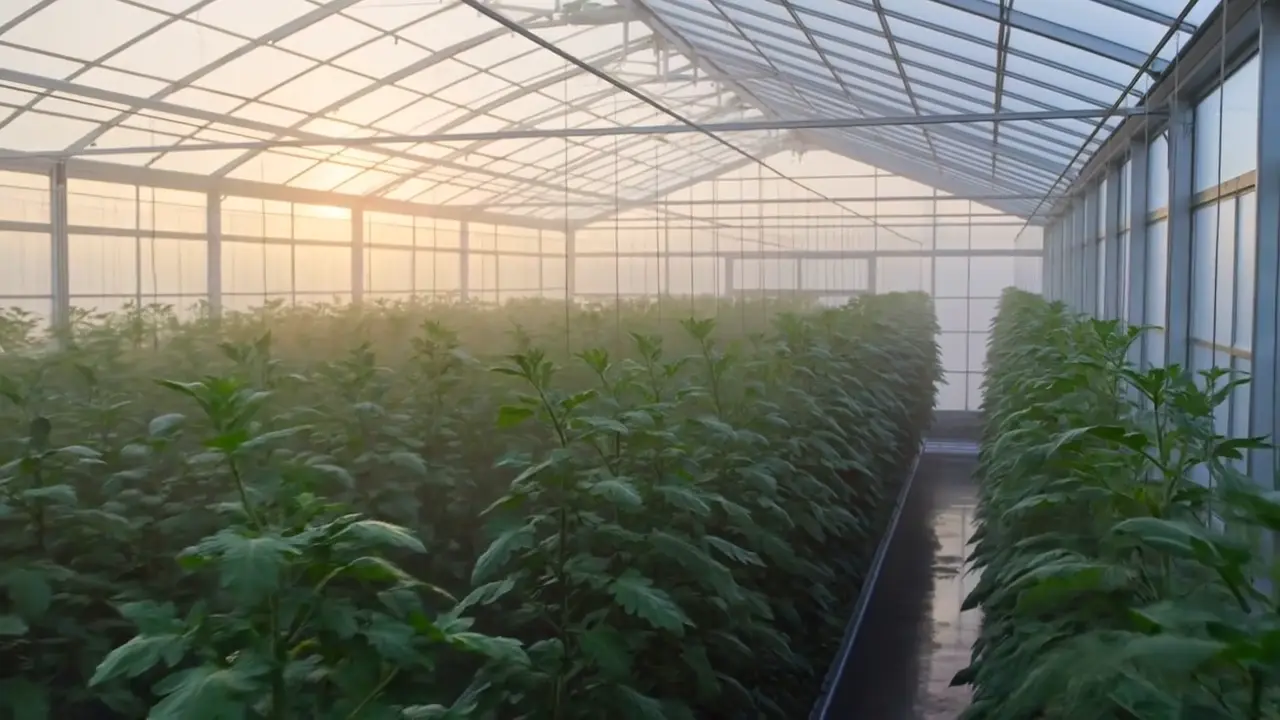
Begin with the crop, growing area, water source and available site information. Describe the planned zones, filtration, pumps, pipework, irrigation devices, controls and any installation needs as one system. A supplier can then identify missing measurements, compatibility questions and the items that require a site-specific quote.
01 / Describe the crop, space and existing water source
Provide the project location, growing area, crop, production method and growing calendar. If the greenhouse already operates, identify the areas served, existing lines and any components being replaced. Explain whether water comes from a municipal connection, well, stored rainwater or another source, and share the available records rather than assuming the source can meet the design load.
Water quality matters to both plants and equipment. Penn State Extension notes that irrigation-water characteristics affect plant production and can contribute to residues or scaling in equipment. A water test and the sampling details give the designer a more useful starting point than a visual estimate.
- Crop, footprint, production method and intended zones.
- Water source, available records and any seasonal variation.
- Current equipment, connections and observed problems.
02 / Connect filtration, pressure and distribution
List the planned water path from source to crop: storage where needed, filtration, pump or pressure source, main line, zone valves, laterals and emission devices. Record existing models, pipe sizes, connection types, available power and the measurements already taken. The final flow and pressure requirements depend on the selected components and simultaneous zone demand.
A high tunnel and a fully equipped commercial greenhouse may use different water, ventilation and control designs. USDA NRCS describes drip irrigation as one way to deliver water within high-tunnel systems. That is context for a design discussion; it is not a universal configuration or an installed Forem system.
- Source and filtration specification.
- Measured pressure and flow where available.
- Zone layout, pipe interfaces and watering-device requirements.
03 / Define control, monitoring and installation responsibilities
If automation is desired, identify what the operator wants to monitor, when alarms should appear and which controller or existing equipment must be compatible. List electrical supply, network access, local manual operation and backup needs. Sensor type, calibration and actuation interfaces are selected for the actual installation.
Separate the supply request from the work to install, connect, commission and maintain it. State who provides trenches, electrical work, site preparation, testing and operator training. A website visualization or editable configuration does not connect to or operate physical irrigation equipment.
04 / Ask for a complete, comparable quotation
Send the location, project timing, quantities, drawings or measurements and the performance information you have. Mark unknown items explicitly. Ask the supplier to identify included parts, installation scope, freight, taxes, commissioning, warranties and ongoing service rather than treating a list of component prices as the finished project cost.
Forem’s farm infrastructure and greenhouse-supply pages provide a way to discuss the site and equipment. They are separate from the produce-ordering path offered through Farm Fresh to Market. Compatibility, stock, installation territory, final price and delivery terms must be confirmed for each project.
QUESTIONS PEOPLE ASK
Direct answers.
What information helps someone size a greenhouse irrigation system?
The crop, footprint, number of zones, water-source quality and quantity, measured pressure and flow, elevation, existing equipment, available power and operating schedule are useful starting details. The final design depends on the selected equipment and site.
Can I request both equipment and installation?
Yes. Describe the equipment needed and separately identify whether the request includes installation, electrical work, commissioning and training. Coverage and scope require confirmation.
Does the online greenhouse model control my irrigation equipment?
No. The site provides planning and illustrative tools. A live system would require suitable equipment, authorized connections, site-specific controls and commissioning.
SOURCE RECORD
Read the material.
Primary technical and company sources support the general explanations above. Project-stage claims are stated separately.