
MOVE
Low rolling carrier
Carries a guided lift, one supported suction cup and the receiving basket through a clear crop aisle.
Inspect component & source statusForem / THE INTELLIGENT GROWING CHAIN
A roof that responds to sunlight. A pack that remembers its harvest. A store that tells you when something changes. Follow the connections—and decide which improvement earns its place.
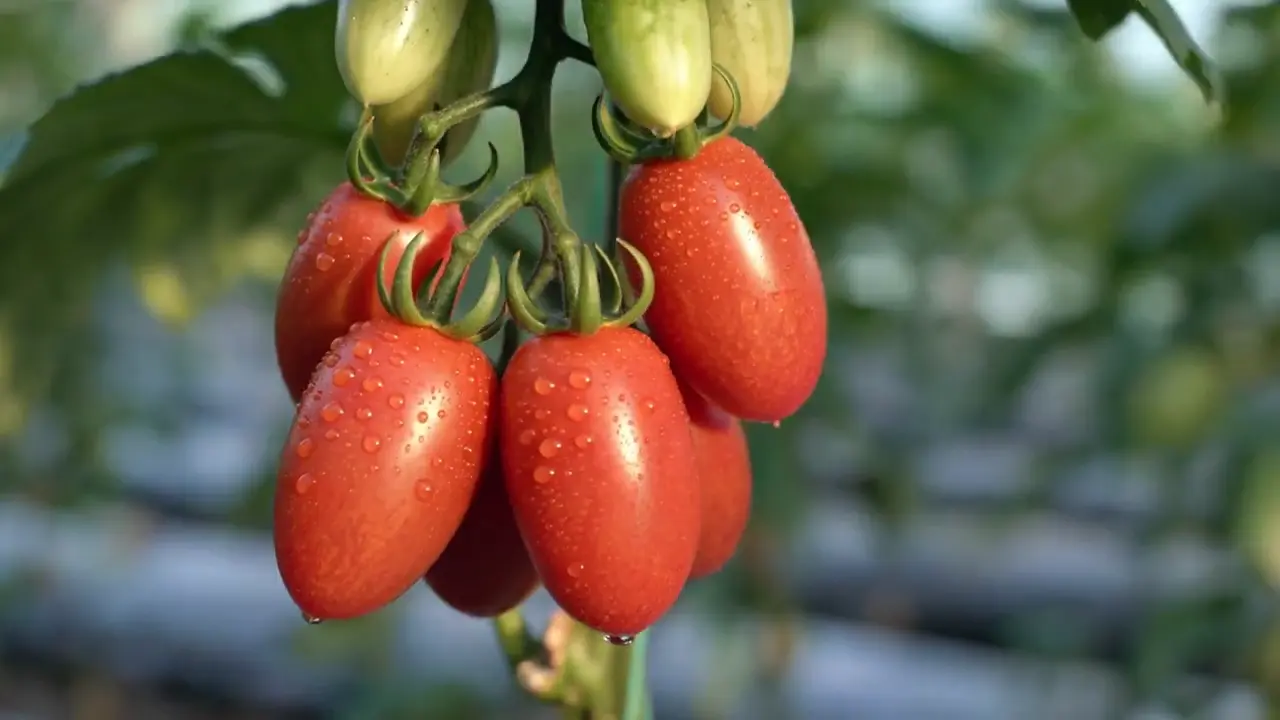
THE IDEA
Where does the crop lose quality? Where does the team lose time? What can a simple sensor reveal? Build the answer from serviceable parts, local skills and measured results. Connect the whole chain as each improvement proves useful.
FOLLOW THE VALUE / SELECT A STATION
Four places to make a difference01 / GREENHOUSE
Start with a record of what the plants actually experience. Add shade, ventilation and irrigation in stages, then let each bay respond to its own measurements.
Find the parts in the greenhouse Explore the harvest machine conceptCrop stage + bay + harvest lot → packing house
HOW THE SYSTEM WORKS
Shield temperature and humidity sensors from direct radiation. Use canopy PPFD and its daily integral for crop light; a cheap lux board can demonstrate changes but cannot replace a quantum sensor.
A geared drive pulls a reinforced screen over supported guides. Size the cord, pulleys, mounting, torque and braking for travel and load. End limits stop motion; manual release keeps the bay usable.
Ventilation exchanges air; circulation fans move it within the crop. Mist can cool through evaporation when the air allows it. High humidity, leaf wetness or low water pressure should inhibit mist.
Compare measured conditions and crop response. Share crop-stage targets between greenhouses, while allowing different local shade and vent positions. Mylar trials need before/after light maps and hot-spot checks.
CHOOSE THE DEPTH
One sensing node beside a manual greenhouse. Learn where the temperature, humidity and daylight change before buying a drive.
Log a baseline through representative weather; compare readings with a reference instrument.
The monitoring pilot below itemizes a starting point.
Automate one compatible vent or small shade zone. Keep the rest manual while proving the local control loop.
Test full travel, stalled motion, power loss and weather overrides before repeating the module.
Assisted and integrated systems need site-specific sizing and quotes. The pilot budget below does not price this larger scope.
Coordinate multiple crop zones, irrigation, shade, vents and cameras through versioned crop recipes.
Demonstrate crop uniformity without increasing rejected fruit, water use or energy per saleable kilogram.
Assisted and integrated systems need site-specific sizing and quotes. The pilot budget below does not price this larger scope.
Compare canopy conditions at matching crop stages. A lower number is useful only if quality, water use and energy are also acceptable.
02 / PACKING HOUSE
The first upgrade can be a better handoff: one lot identity, one verified pack weight and one clear reason for every rejection. Mechanize the bottleneck once you can measure it.
Compare grading and packing equipment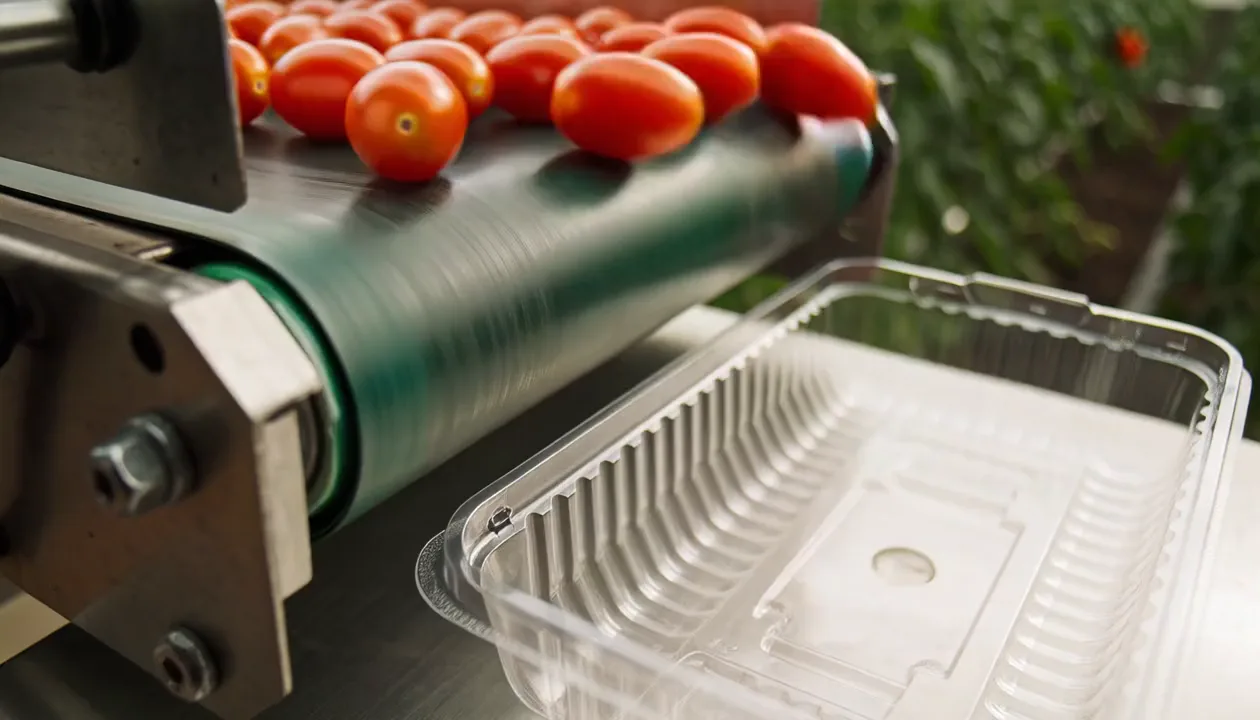
Harvest lot + pack weight + release status → storage
HOW THE SYSTEM WORKS
Record farm, bay, pick date, container count and incoming condition. Keep lots separated or document their transformation when packing combines inputs.
Use a clean, repeatable inspection area. A fixed camera can record color and visible defects for review; it cannot prove internal quality or food safety.
Tare the empty package and verify net weight on a suitable calibrated scale. Link the pack to its lot and buyer format. A volumetric filler still needs weight checks.
Add gentle infeed, grading, filling, sealing or labeling where a timing study shows the constraint. Include accumulation space, cleaning access, guards and a local stop/reset.
CHOOSE THE DEPTH
Use an existing suitable scale and workstation. Add a lot record and a repeatable camera view for quality review.
Reconcile incoming kilograms to packed, rejected and remaining product; investigate unexplained differences.
The monitoring pilot below itemizes a starting point.
Add a checkweigher, label printing and guided pack instructions while operators judge delicate fruit.
Trial actual fruit and packaging; compare giveaway, label accuracy, handling damage and output.
Assisted and integrated systems need site-specific sizing and quotes. The pilot budget below does not price this larger scope.
Connect grading, filling and labels only after the product and pack formats are stable.
Specify acceptance criteria using your crop. Manufacturer maximum throughput is not your guaranteed rate.
Assisted and integrated systems need site-specific sizing and quotes. The pilot budget below does not price this larger scope.
Track weight giveaway, rejects, bruising after storage and rework beside speed. A faster conveyor alone is not a better packing operation.
03 / STORAGE & DISPATCH
Give every lot a location, a release decision and an appropriate handling plan. A small door sensor and temperature record can expose an expensive habit before you buy more machinery.
Follow the handling and delivery workflow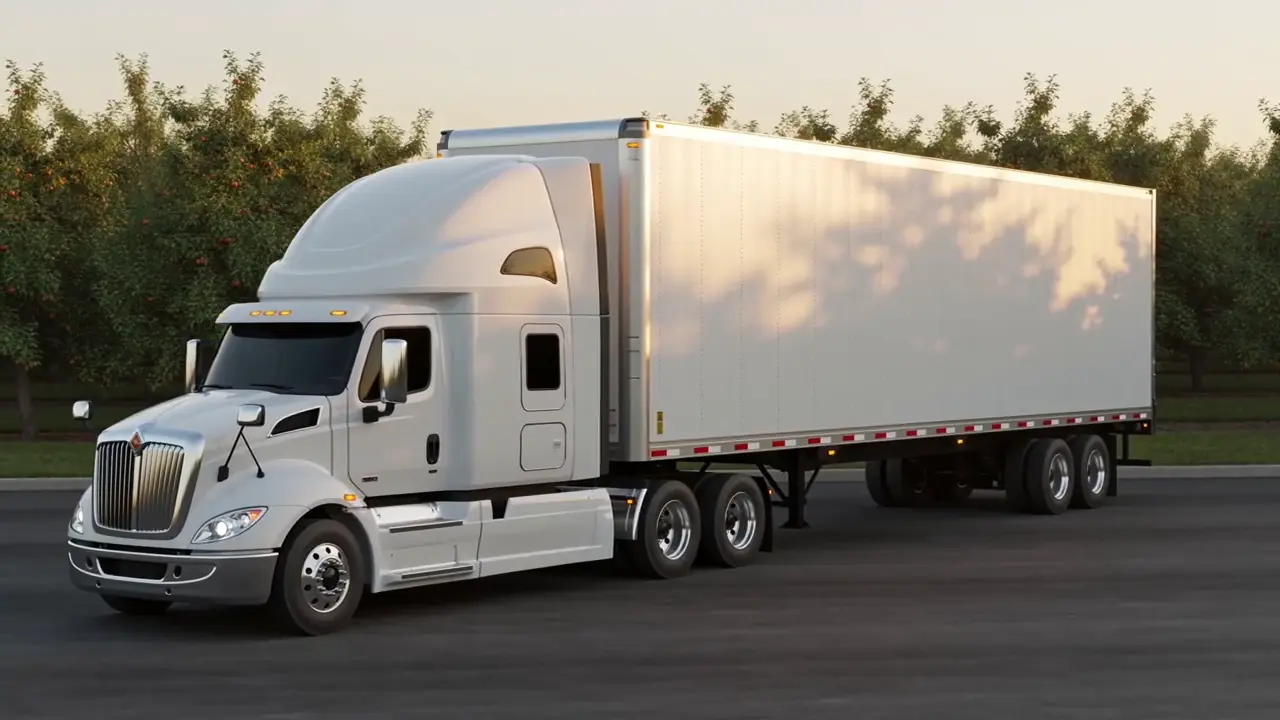
Released lot + pallet + handling record → customer
HOW THE SYSTEM WORKS
Set storage and dispatch requirements by crop, maturity, duration and buyer specification. Tomatoes can suffer chilling injury; colder is not automatically better.
Measure warm and cold locations before choosing fixed sensor positions. Add a door-open timer and compare it with temperature changes. A waterproof electronics probe is not automatically a food-contact instrument.
Local alarms identify a prolonged open door, stale reading or out-of-range condition. The operator checks the product and records the action; the alarm does not release a held lot.
Scan lot to case, case to pallet and pallet to order. Use first-expiring-first-out where appropriate, keep air paths clear and verify the receiving conditions before loading.
CHOOSE THE DEPTH
Add room-temperature logging and a door-open record to an existing store.
Compare against a reference thermometer; simulate a disconnected probe and an open door.
The monitoring pilot below itemizes a starting point.
Link a lot-location scan to the room record and an operator task queue.
Perform a trace-back from a shipped case and reconcile physical inventory with the record.
Assisted and integrated systems need site-specific sizing and quotes. The pilot budget below does not price this larger scope.
Connect the inventory, refrigeration controls and dispatch schedule through verified interfaces.
Validate loaded-room behavior and recovery, including outage and delayed-collection scenarios.
Assisted and integrated systems need site-specific sizing and quotes. The pilot budget below does not price this larger scope.
Use product-specific limits and separate air from product temperature. Reconcile inventory and verify the condition of the delivered lot.
04 / AI & SHARED LEARNING
Connect conditions to outcomes, not just screens to sensors. The useful question is which change improves saleable product, labor or resource use—and whether that result repeats.
Explore research and operating assumptions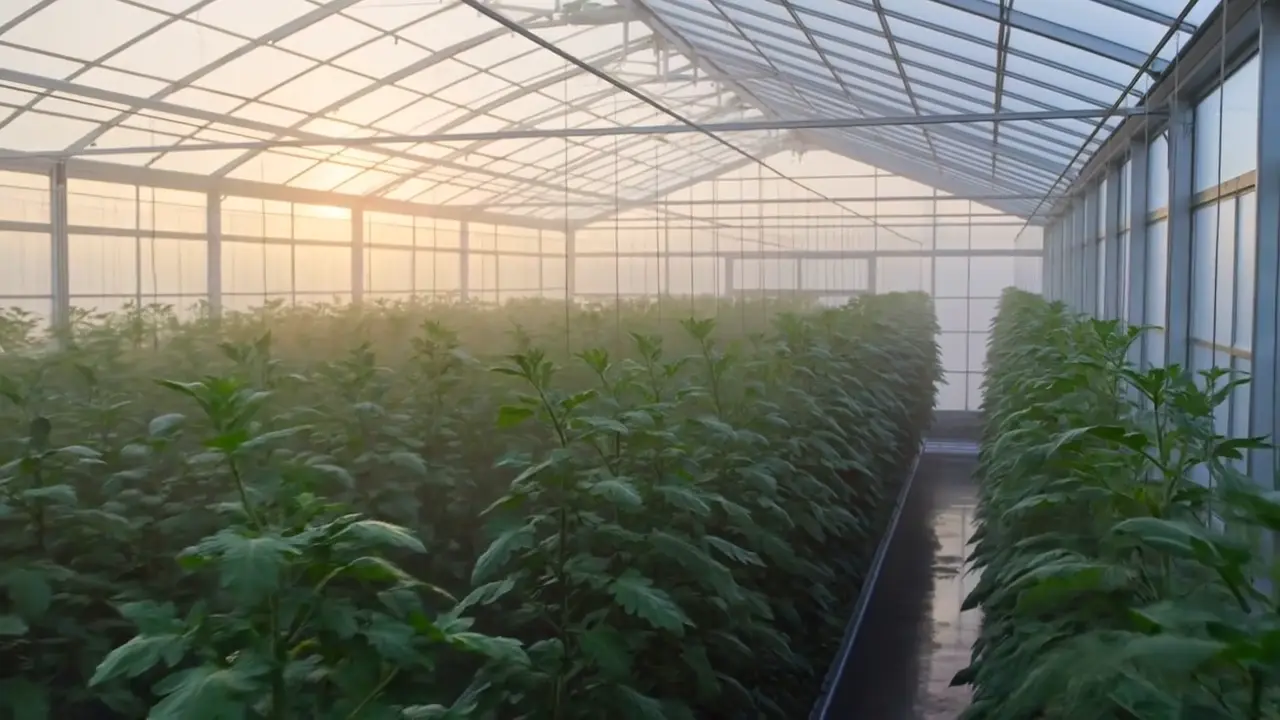
Reviewed outcome + approved recipe revision → greenhouse
HOW THE SYSTEM WORKS
Fix camera position, framing, timestamps and exposure checks. Include a scale/color target. A missing or dirty image should become a data-quality issue, not a crop diagnosis.
Join bay and crop stage to harvest lot, pack outcome and shipment. Keep calibration, recipe versions and operator interventions beside the measurements.
Start with growth-change and visible-defect flags. Test on held-out images from your own crop and lighting. An operator confirms the finding; the model cannot silently change climate limits.
Compare a revised setting with an unchanged baseline while tracking weather and crop stage. Log who approved the change and keep an immediate rollback to the last known recipe.
CHOOSE THE DEPTH
A camera, timestamps and a simple shared record can reveal more than an unvalidated prediction.
Trace one photographed crop batch through packing and delivery without losing its identity.
The monitoring pilot below itemizes a starting point.
Use locally tested vision to rank images for human review and detect missing or stale data.
Measure useful alerts and missed cases; include time spent reviewing alerts in the cost model.
Assisted and integrated systems need site-specific sizing and quotes. The pilot budget below does not price this larger scope.
Compare similar crop stages, suggest a bounded recipe change and require grower approval.
Repeat gains across representative cycles before attributing yield or profitability to AI.
Assisted and integrated systems need site-specific sizing and quotes. The pilot budget below does not price this larger scope.
Compare like-for-like crop stages and keep an unchanged comparison where possible. Record failures and model uncertainty as carefully as successes.
THE NEXT HANDOFF / HARVEST
Follow the crop from a measured greenhouse row into the packing house. Explore a proposed, serviceable harvesting concept and the components behind each step.
ONE FRUIT / A CONTROLLED HANDOFF
A guided lift and short approach slide position one suction cup above a low rolling base. Interchangeable tips adapt the contact size to the crop. A regular RGB camera guides approach; the tip-sensing study adds local acoustic feedback. The pepper configuration uses an electrically heated stem-cutting wire and a cushioned basket that supports the fruit before cutting. Both remain development designs awaiting physical crop trials.
MOVE
Carries a guided lift, one supported suction cup and the receiving basket through a clear crop aisle.
Inspect component & source statusSEE
Finds visible grape tomatoes and observes the approach. Echo ranging beside the cup is a separate development study.
Inspect component & source statusREACH
A short supported tool approaches one fruit at a time. Swap the compliant cup for the crop: a small grape-tomato tip or a larger-fruit tip, sharing one vacuum path.
Inspect component & source statusHOLD
Cup-pressure feedback checks the hold through separation and transfer. The current design revision records the remaining detachment decisions.
Inspect component & source statusRECEIVE
Receives supported fruit after a short transfer and controlled vacuum release.
Inspect component & source statusPROTECT
Provides a visible stop location; circuit behavior, reset and a supervised trial remain part of engineering.
Inspect component & source statusPart details distinguish seller-priced references, supplier options, and materials that need a quote or in-house fabrication. Build costs are planning inputs, not a Forem offer.
A CLOSER LOOK / THE CLIMATE LOOP
Select a condition to see why a responsive greenhouse coordinates its equipment. This is control logic you can inspect, rather than a promise that one setting fits every crop.
Temperature above target · humidity below ceiling
Move within crop-light limits
Open within weather limits
Pulse only with verified water flow
A brief mist pulse may cool the air as water evaporates. Recheck temperature, humidity and leaf wetness before another pulse. Crop stage, outside weather and water quality determine the actual settings.
Inspect the actual system components ↗YOUR FIRST MODULE / GREENHOUSE
Start with a bounded pilot, then replace the assumptions with your own quotes and time study. Change the station above to explore a different part of the chain.
No shade motor, solar subsystem, crop-light sensor, fan, mist system or whole-greenhouse installation is included in this pilot. Add scoped quotes before using the model for those upgrades.
| Component / purpose | Qty | Unit cost | Line total |
|---|---|---|---|
| QT Py ESP32-C3 control board Logs local inputs and reports over Wi-Fi. Public retail reference / scopeOut of stock when checked. Arduino-compatible bare board; a replacement requires validation. View source & buying options ↗ | 1board | $9.95 | $9.95 |
| SHT40 temperature / humidity board Measures the air at a representative location. Public retail reference / scopeIn stock when checked. Add shielding, placement checks and calibration. View source & buying options ↗ | 1board | $5.95 | $5.95 |
| VEML7700 demonstration light board Shows a relative daylight response on the bench. Public retail reference / scopeIn stock when checked. Lux is not PPFD; not included as a crop-light control instrument. View source & buying options ↗ | 1board | $4.95 | $4.95 |
| Enclosure, shield and mounting Protects and positions the sensing node. Planning allowance · edit below / scopeEditable material allowance; environmental suitability and actual takeoff are not established. | 1set | $35.00 | |
| Supply, cables and small hardware Powers and connects a single monitoring node. Planning allowance · edit below / scopeEditable allowance. No actuator, photovoltaic panel or battery included. | 1set | $25.00 |
Public retail and manufacturer references are not Forem acquisition costs or a delivered offer. Stock, variants, freight and tax need confirmation. The lowest-cost board is one component of a working system.
01 / COST TO BUILD
02 / VALUE TO TEST
Benefits begin at zero. Enter measured inputs, or load a clearly hypothetical example to understand the arithmetic.
Build budget = (selected parts + other quoted costs + assembly hours × loaded labor rate) × (1 + build reserve).
Annual labor value = minutes released ÷ 60 × days × hourly rate × economic realization.
Annual net benefit = labor value + recovered kilograms × net contribution per kilogram − added annual running costs.
Simple payback = build budget ÷ positive annual net benefit × 12 months. No positive benefit means no payback. The model does not forecast sales, crop yield, financing or taxes.
Three-year break-even = build budget ÷ 3 + added annual running costs. This is a target for gross annual benefits, not a forecast.
YOUR FIRST MODULE / PACKING HOUSE
Start with a bounded pilot, then replace the assumptions with your own quotes and time study. Change the station above to explore a different part of the chain.
Existing suitable scale, bench, computer/printer and safe work area are assumed. No grader, filler, conveyor or commercial weighing approval is priced. New equipment requires separate quotes.
| Component / purpose | Qty | Unit cost | Line total |
|---|---|---|---|
| Camera Module 3 · standard lens Records repeatable images for review. Public retail reference / scopeStandard 75° version, in stock when checked. Camera only, not a trained vision system. View source & buying options ↗ | 1camera | $29.25 | $29.25 |
| Raspberry Pi Zero 2 W Captures images and buffers a small local record. Manufacturer advertised price / scopeManufacturer advertised board price; reseller stock and delivered price need confirmation. This is not a large-model AI server. View source & buying options ↗ | 1board | $15.00 | $15.00 |
| Camera cable, mount, power and storage Creates one repeatable review viewpoint. Planning allowance · edit below / scopeEditable allowance for accessories; Pi Zero requires a compatible camera ribbon. | 1set | $55.00 | |
| Trial label stock and lot-workstation materials Organizes a small manual lot-label pilot. Planning allowance · edit below / scopeEditable allowance. Existing printer/computer assumed; replace with actual procurement cost. | 1set | $30.00 | |
| Diffuse task-lighting materials Reduces glare and inconsistent inspection views. Planning allowance · edit below / scopeEditable allowance. Food-area suitability and cleanability require selection. | 1set | $40.00 |
Public retail and manufacturer references are not Forem acquisition costs or a delivered offer. Stock, variants, freight and tax need confirmation. The lowest-cost board is one component of a working system.
01 / COST TO BUILD
02 / VALUE TO TEST
Benefits begin at zero. Enter measured inputs, or load a clearly hypothetical example to understand the arithmetic.
Build budget = (selected parts + other quoted costs + assembly hours × loaded labor rate) × (1 + build reserve).
Annual labor value = minutes released ÷ 60 × days × hourly rate × economic realization.
Annual net benefit = labor value + recovered kilograms × net contribution per kilogram − added annual running costs.
Simple payback = build budget ÷ positive annual net benefit × 12 months. No positive benefit means no payback. The model does not forecast sales, crop yield, financing or taxes.
Three-year break-even = build budget ÷ 3 + added annual running costs. This is a target for gross annual benefits, not a forecast.
YOUR FIRST MODULE / STORAGE & DISPATCH
Start with a bounded pilot, then replace the assumptions with your own quotes and time study. Change the station above to explore a different part of the chain.
No cold-room panels, refrigeration plant, calibrated compliance logger, pallet racks or vehicle is priced. Building services and refrigeration engineering remain project-specific.
| Component / purpose | Qty | Unit cost | Line total |
|---|---|---|---|
| QT Py ESP32-C3 control board Logs local inputs and reports over Wi-Fi. Public retail reference / scopeOut of stock when checked. Arduino-compatible bare board; a replacement requires validation. View source & buying options ↗ | 1board | $9.95 | $9.95 |
| DS18B20 sheathed temperature probe Samples two room locations during a monitoring trial. Public retail reference / scopeIn stock when checked. Validate accuracy and location. No food-contact certification or calibrated cold-chain compliance is implied. View source & buying options ↗ | 2probes | $9.95 | $19.90 |
| Magnetic door-contact switch Records whether one store door is open. Public retail reference / scopeIn stock when checked. Protect wiring, validate contact position and detect cable faults. View source & buying options ↗ | 1contact pair | $3.95 | $3.95 |
| Enclosure, supply, cable and mounting Builds one protected monitoring node. Planning allowance · edit below / scopeEditable allowance; no refrigeration power or room construction included. | 1set | $45.00 | |
| Local sounder and interface materials Makes an exception visible without a cloud connection. Planning allowance · edit below / scopeEditable allowance. Backup supply and staffed response plan are additional. | 1set | $20.00 |
Public retail and manufacturer references are not Forem acquisition costs or a delivered offer. Stock, variants, freight and tax need confirmation. The lowest-cost board is one component of a working system.
01 / COST TO BUILD
02 / VALUE TO TEST
Benefits begin at zero. Enter measured inputs, or load a clearly hypothetical example to understand the arithmetic.
Build budget = (selected parts + other quoted costs + assembly hours × loaded labor rate) × (1 + build reserve).
Annual labor value = minutes released ÷ 60 × days × hourly rate × economic realization.
Annual net benefit = labor value + recovered kilograms × net contribution per kilogram − added annual running costs.
Simple payback = build budget ÷ positive annual net benefit × 12 months. No positive benefit means no payback. The model does not forecast sales, crop yield, financing or taxes.
Three-year break-even = build budget ÷ 3 + added annual running costs. This is a target for gross annual benefits, not a forecast.
YOUR FIRST MODULE / AI & SHARED LEARNING
Start with a bounded pilot, then replace the assumptions with your own quotes and time study. Change the station above to explore a different part of the chain.
No trained crop model, GPU server, disease diagnostic system or cloud subscription is included. Dataset labeling, validation, software integration and operator review need their own labor budget.
| Component / purpose | Qty | Unit cost | Line total |
|---|---|---|---|
| Camera Module 3 · standard lens Records repeatable images for review. Public retail reference / scopeStandard 75° version, in stock when checked. Camera only, not a trained vision system. View source & buying options ↗ | 1camera | $29.25 | $29.25 |
| Raspberry Pi Zero 2 W Captures images and buffers a small local record. Manufacturer advertised price / scopeManufacturer advertised board price; reseller stock and delivered price need confirmation. This is not a large-model AI server. View source & buying options ↗ | 1board | $15.00 | $15.00 |
| Power, memory, cable and protected mount Completes a small capture node. Planning allowance · edit below / scopeEditable allowance. Continuous recording changes storage and power requirements. | 1set | $60.00 | |
| Scale / color target and mounting Supports repeatable visual comparisons. Planning allowance · edit below / scopeEditable allowance; no calibrated colorimetric system is implied. | 1set | $25.00 | |
| Local backup media Preserves the pilot record. Planning allowance · edit below / scopeEditable allowance. Existing workstation/network assumed; software and review labor are separate. | 1set | $30.00 |
Public retail and manufacturer references are not Forem acquisition costs or a delivered offer. Stock, variants, freight and tax need confirmation. The lowest-cost board is one component of a working system.
01 / COST TO BUILD
02 / VALUE TO TEST
Benefits begin at zero. Enter measured inputs, or load a clearly hypothetical example to understand the arithmetic.
Build budget = (selected parts + other quoted costs + assembly hours × loaded labor rate) × (1 + build reserve).
Annual labor value = minutes released ÷ 60 × days × hourly rate × economic realization.
Annual net benefit = labor value + recovered kilograms × net contribution per kilogram − added annual running costs.
Simple payback = build budget ÷ positive annual net benefit × 12 months. No positive benefit means no payback. The model does not forecast sales, crop yield, financing or taxes.
Three-year break-even = build budget ÷ 3 + added annual running costs. This is a target for gross annual benefits, not a forecast.
DESIGNED FOR THE DAY SOMETHING FAILS
Keep time-critical controls local. Buffer readings when the network drops, mark stale data and restore the record when connectivity returns.
Define each failure response for the site: wind, rain, overheating, stalled motion and empty water supply may require different actions. Retain manual operation and a local stop/reset.
Solar can suit an intermittent motor and small node. Size peak motor current, worst-season sun and battery autonomy; continuous fans, pumps and refrigeration need separate energy budgets.
Mount sensors correctly, check against a reference, clean lenses and nozzles, test limits, inspect cords and bearings, and record the next service date.
A model can flag a pattern. Growers approve recipe changes; operators release food lots. Keep access controls, backups and a tested rollback.
ONE CONNECTED CORPORATION
Growing systems, materials, packing, distribution and technology belong in the same conversation. Start with one practical problem. Turn the result into a repeatable module—and make it useful to the next grower.
Meet the businesses behind the chain ↗Explore the component catalog ↗