
Input weight
Cost incurred: $1,400INSIDE THE OPERATING MODEL
From a living crop
to a saleable shipment.
A greenhouse creates ways to manage a crop. Grading, packing and transport determine what reaches the buyer. Follow those dependencies, then test how a shipment’s economics change.
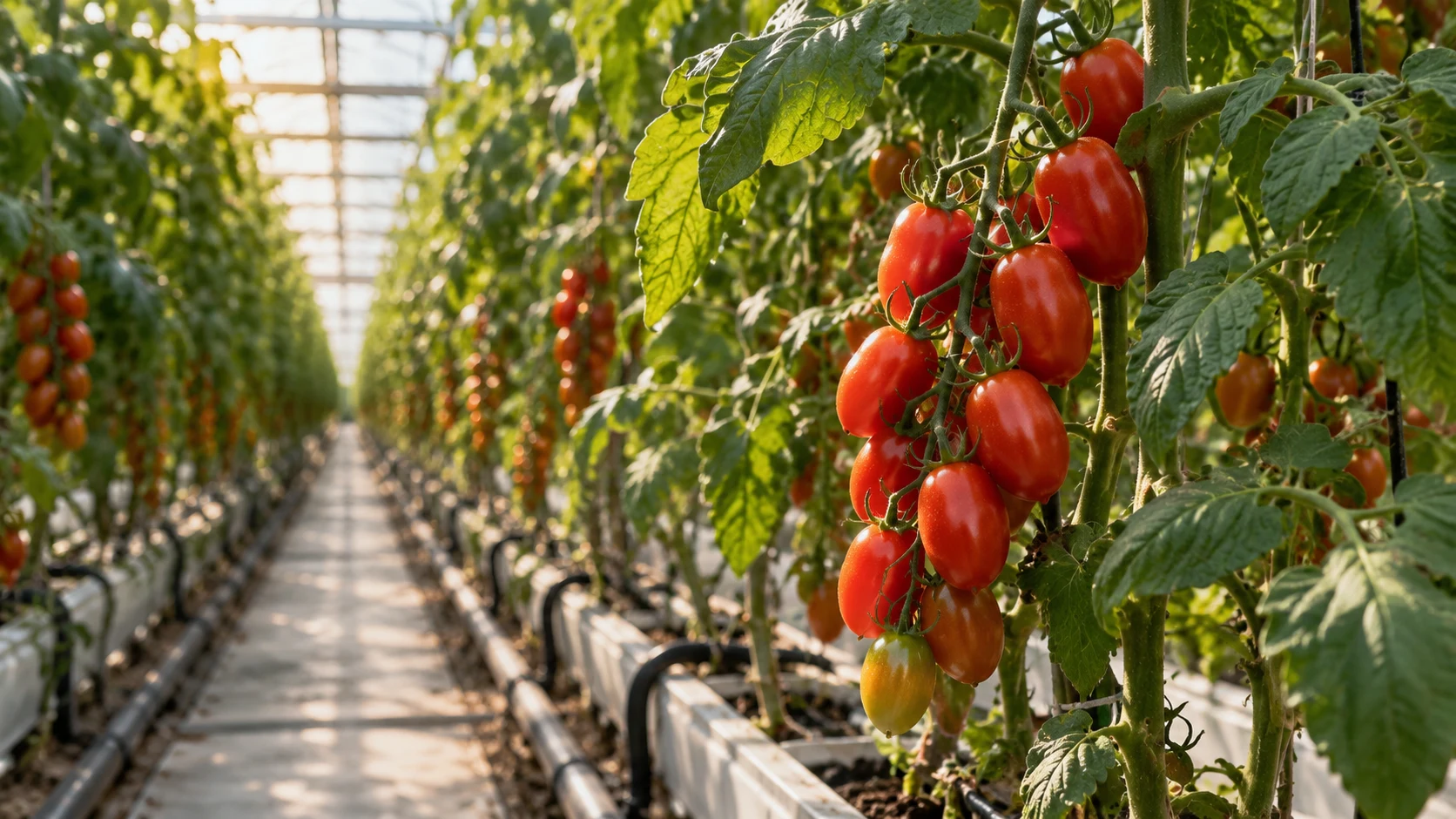 Illustrative crop schematic · stages can overlap · no fixed timings
GROWING DEPENDENCIES / 1 OF 6
Establish the plant
Confirm root establishment before increasing crop demand.
- Inputs
- Transplants + water + suitable growing medium
- Output
- A supported plant ready for canopy growth
- Why it matters next
- Root-zone condition and transplant quality affect every later stage.
- Operator decision
- Check establishment and plant condition before progressing; a calendar alone cannot confirm readiness.
- Commercial risk
- Poor establishment can carry forward as uneven growth and reduced saleable output.
WHERE THE QUANTITY CHANGES
A rejected kilogram loses revenue.
It keeps the costs already incurred.
The shipment model below links grade loss and transit loss to saleable quantity, then carries the growing or purchase cost, packing, labor and freight through to the result. Every number is an editable illustration in USD, not a company record or quote.
Grade loss−80 kg
Measure rejected weight against the agreed specification.
Saleable packed weight
Packing: $230Handling labor: $100
Transit loss−18.4 kg
Condition and receiving exceptions reduce accepted quantity.
Accepted saleable weight
Freight: $350Revenue: $2,705
Test the tradeoff.
Grade loss is applied to input weight. Transit loss is applied to packed weight. All accepted kilograms sell at one price; rejected product earns no salvage revenue. Packing is charged on packed weight, even if some product is later lost in transit.
Shipment costs & overhead assumptions
Illustrative overhead allocation is not a company accounting policy. Input growing/purchase cost excludes these separately entered costs; avoid double counting in a real analysis.
ILLUSTRATIVE SHIPMENT / USD
Revenue$2,705
Growing / purchase−$1,400
Packing−$230
Handling labor + freight−$450
Contribution before fixed overhead$625
Allocated overhead−$150
Balance after modeled costs$475
Break-even price after modeled costs: $2.47 / accepted kg.
This balance is not net profit. It excludes capital spending, depreciation, financing, tax and any costs not entered. No payment delays, price mix, returns or capacity constraints are modeled.
One extra percentage point of grade loss changes contribution by approximately -$27, keeping other inputs fixed.
FROM EXPLANATION TO EVIDENCE
What a serious review
needs to establish.
A public profile introduces the operation. A commercial or strategic decision needs current records and a clearly defined scope.
- Business & assetsConfirm legal entities, ownership, asset condition, land or lease rights and which activities are in scope.
- Output & qualityReconcile planted area, harvest weight, pack-out, rejections and accepted shipments over the same period.
- Customers & costsReview customer concentration, confirmed terms, invoices, input costs, labor, freight and working capital.
- Systems & continuityReview equipment, utilities, maintenance, staffing, operating procedures and regulatory records.